

By Ruth Brown, Idaho Reports
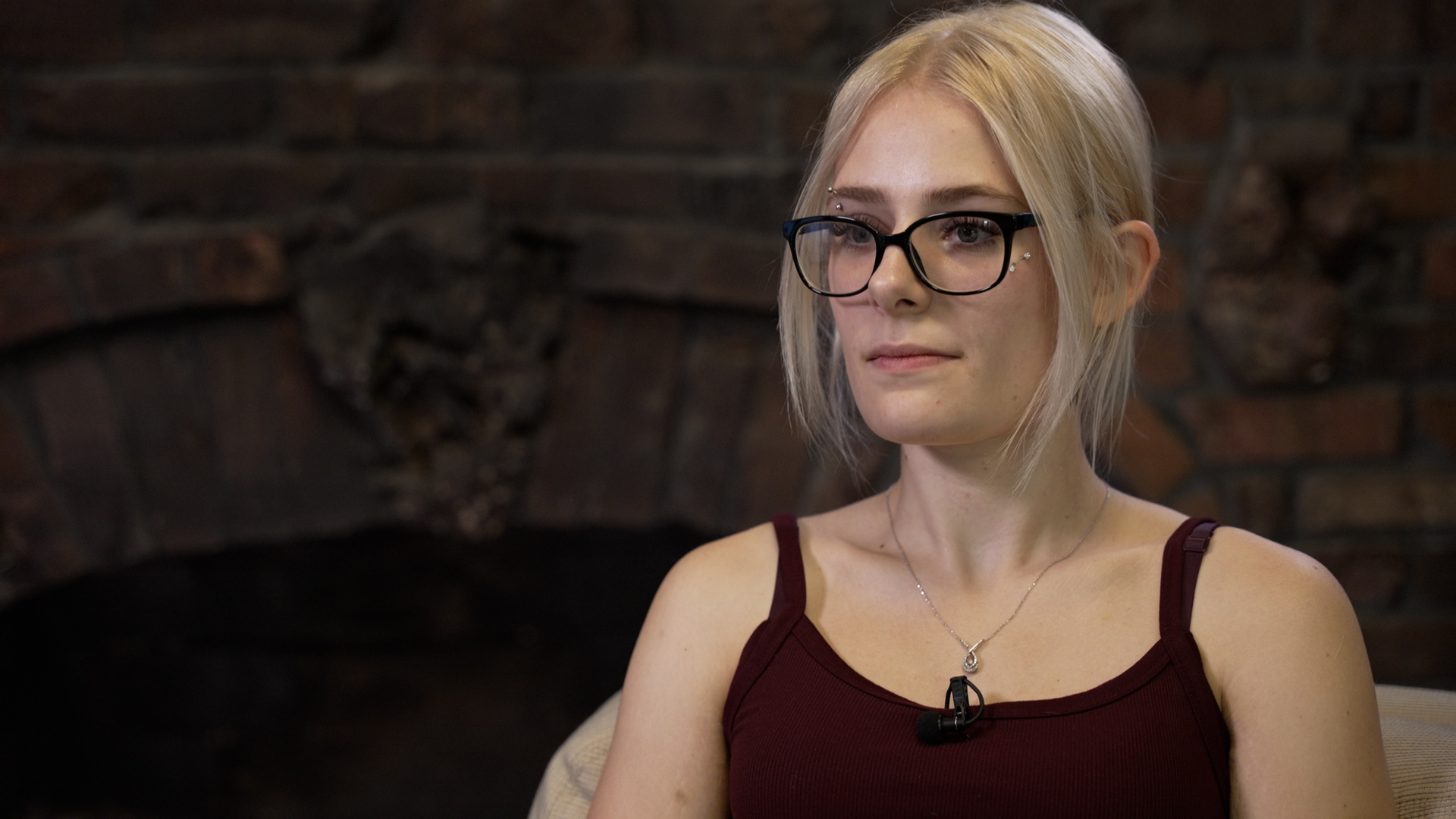
Cadence Wright spent years in and out of the Idaho foster care system, and on her way out, she found her voice.
She’s frustrated because she was in the system through no fault of her own. She’s frustrated because she didn’t feel heard. She’s frustrated because she believes people place blame on the kids. As the Idaho Department of Health and Welfare turns its attention to improving the foster system, Wright, now 18, hopes state leaders don’t forget to listen to the children affected by those policies.
Between the ages of 14 to 18, Wright had 18 different placements. Most of those placements were at group homes, but she also spent time at a psychiatric hospital, as well as six weeks at an AirBnB.
The Idaho Department of Health and Welfare used short-term rentals in recent years when they had nowhere else to place kids in foster care. As of November, IDHW announced it no longer uses temporary housing. But there are still problems for the state to tackle.
COMPOUNDING TRAUMA
The foster system wasn’t new to Wright; She was also in foster care for two years when she was younger, ages 9 to 11, before reuniting with her parents for a few years. Wright says her biological parents were mentally and physically abusive and neglectful to their children and have substance use problems.
Reflecting on her childhood, Wright’s experiences in foster care are mostly negative, especially when at the AirBnB temporary housing.
“It was a mess. There was 15 kids at one point with two bedrooms, and there was kids sleeping on couches, on the floor, on air mattresses,” Wright said about the AirBnB. “There was hardly any food. The staff there were not … trauma informed at all. I can give you examples of them being not trauma informed by busting down bathroom doors because you’re taking too long in the bathroom. That should not be allowed.”
She tried to advocate for herself and get out of bad living arrangements.
“A lot of the situations I was in, I was asking to be removed out of, and I was kept there,” she said. “So there was a lot of me begging to be taken out of some really bad situations and them leaving me there. So, most of the time when I was removed, it was after a lot of advocating and trying to get help before they did anything.”
IDHW Deputy Director of Child, Youth, and Family Services Monty Prow told Idaho Reports the department couldn’t respond to Wright’s claims specifically, but said the children’s safety is a priority.
“Certainly, the youth’s needs are the very most important for us,” Prow said. “Obviously you’re talking about food and clothes, a comfortable place to sleep, medications, all of those things come into play. So we talked about short-term rentals and about getting out of that temporary housing.”
Last year, the department placed more than 170 foster children in temporary housing accommodations because the state had nowhere else for them. In May, the state opened the Payette Assessment and Care Center, a 16-bed foster care facility that acts as an alternative to the temporary homes DHW previously used. The department also reduced barriers to becoming a licensed foster parent, and reported a record number of new foster parents over the summer.
WHO’S IN FOSTER CARE
Roughly 1,400 children are placed in foster care annually in Idaho. While most of those children are now either with foster families or kinship families, meaning someone known to the child, some children have complex care needs.
As of Nov. 25, 210 children were in congregate care settings, according to IDHW. Of those 210 kids, 57 are out-of-state because an in-state provider was not available for their needs.
- 96 are with a Qualified Residential Treatment Provider for complex and severe behavioral, mental and emotional needs. A court order is required to put a child in a QRTP.
- 8 are at the Payette Assessment and Care Center
- 106 are at transitional housing settings, group home settings, and psychiatric residential treatment facilities. Those at the psychiatric residential treatment facilities require 24-hour supervision due to several mental health needs.
Idaho, like other states, has a disproportionate number of children of color taken into foster care. That’s an issue Prow hopes to address with prevention.
According to the most recent data from IDHW in state FY2023, compared with U.S. Census data from 2020:
- 21.8% of foster kids are Hispanic or Latino, while 13% of the state population is Hispanic of Latino
- 3.1% of foster kids are Native American, while 1.39% of the state population is Native American
- 1.8% of foster kids are Black, while .85% of the state population is Black
“It’s absolutely important and critical that our workers meet the families where they are both in issues surrounding culture and race, and certainly issues surrounding safety of their youth,” Prow said when asked about those numbers. “So, our staff are trained in meeting those needs and meeting those families where they’re at. And that’s what we would look towards to continue on. And prevention intervention spaces will then look towards those numbers and you’ll see those numbers look a little different as we move closer and closer and farther upstream from removal and keeping those families whole.”
FOSTER REFORMS
IDHW Director Alex Adams has publicly said before legislative committees and budget committees that his focus is on foster reform. Gov. Brad Little indicated in an AARP townhall on Nov. 25 that foster care would also be a priority for him in the next legislative session.
Since Adams took the job, the department has increased its recruitment of willing foster families and halted the use of AirBnBs for now. Adams also hopes to increase the reimbursement rate of foster families, and told members of the Joint Finance-Appropriation Committee on Nov. 20 that all other divisions of IDHW were generally held to a maintenance budget, to prioritize child welfare’s budget.
While improving foster care is vital, preventing children from entering the system in the first place is also a priority for Health and Welfare.
“Prevention intervention is a space that has proven nationally and in the state to be effective,” Prow said. “It’s oftentimes the least expensive option if you think about what happens potentially afterwards. So, we are wholly invested in prevention intervention to keep that family unit whole. What that looks like practically on a day-to-day basis is it could be one of our workers providing direct delivery of services to bio mom or dad.”
That could include providing substance use treatment, or behavioral health treatment to either parents, children, or both. Sometimes intervention includes multiple services and family counseling, Prow said.
IDHW’s fiscal year 2026 budget requests 36 new positions for prevention specialists. Prevention specialists would provide families with resources, such as anger management or substance use disorder treatment, to help them before removing a child from the home becomes necessary.
The budget request also asks for new positions in recruitment, licensing and others to improve the child welfare system. Legislators will review the budget request in January after the governor releases his budget recommendations.
CAUTIOUSLY HOPEFUL FOR CHANGE
Wright remains in extended foster care, a program that assists young adults aging out of the program with housing and education. The program helps her with housing and tuition payments at College of Western Idaho. Though she is no longer a ward of the state, she still cares about proposed changes after everything she’s been through.
In 2024, the Legislature established a new state office of the ombudsman that would operate independently of the courts and IDHW. The office would establish a procedure for receiving, examining and resolving complaints regarding children under state supervision. Complaints could come from foster parents or biological parents, or teenagers or others involved in the foster care system.
In late November, Little appointed Trevor Sparrow as the Health and Social Services Ombudsman, a role created by the 2024 legislature.
“I think that is going to be a huge step towards assisting and giving foster youth a little bit more of a voice,” Wright said.
But Wright knows that real change takes time and is cautious with her expectations after everything she has been through.
“I think anybody in my situation would be frustrated,” Wright said. “If you have seen the things that I have seen and been through some of the things that I have been through while I’ve been in care, I think anybody would understand. I’m frustrated because I see what the system is doing and I see all of the children who are suffering from it, and I know that it’s not getting any better no matter how much I have done personally. And no matter how much all of these other people, who continue to do things every day, it’s frustrating that the department continues to turn their head to the people who are sticking up for themselves and they’re claiming to want to hear from us, but they change nothing. So, I’m very frustrated that the department is continuing to fail us.”
As the dialogue over foster care continues, Wright wants the public to have a better understanding of how foster care works, or doesn’t work, for kids in the system.
“I think there’s a lot of misunderstanding when it comes to foster children and group homes,” Wright said. “A lot of people look at group homes and children in group homes as they’re there because they’re the issue and they’re there because they’re the troublemakers of all of the children and nobody wants them. And I think that that is the most harmful thing anybody could ever think. When it comes to the foster system, I guess we are thrown into situations and expected to survive with multiple different people trying to parent us, people who have no idea how to deal with trauma. We do not act out and become bad kids for no reason.”

Ruth Brown | Producer
Ruth Brown grew up in South Dakota and her first job out of college was covering the South Dakota Legislature. She’s since moved on to Idaho lawmakers. Brown spent 10 years working in print journalism, including newspapers such as the Idaho Statesman and Idaho Press, where she’s covered everything from the correctional system to health care issues. She joined Idaho Reports in 2021 and looks forward to telling stories about how state policy can impact the lives of regular Idahoans.