
by Idaho Reports staff
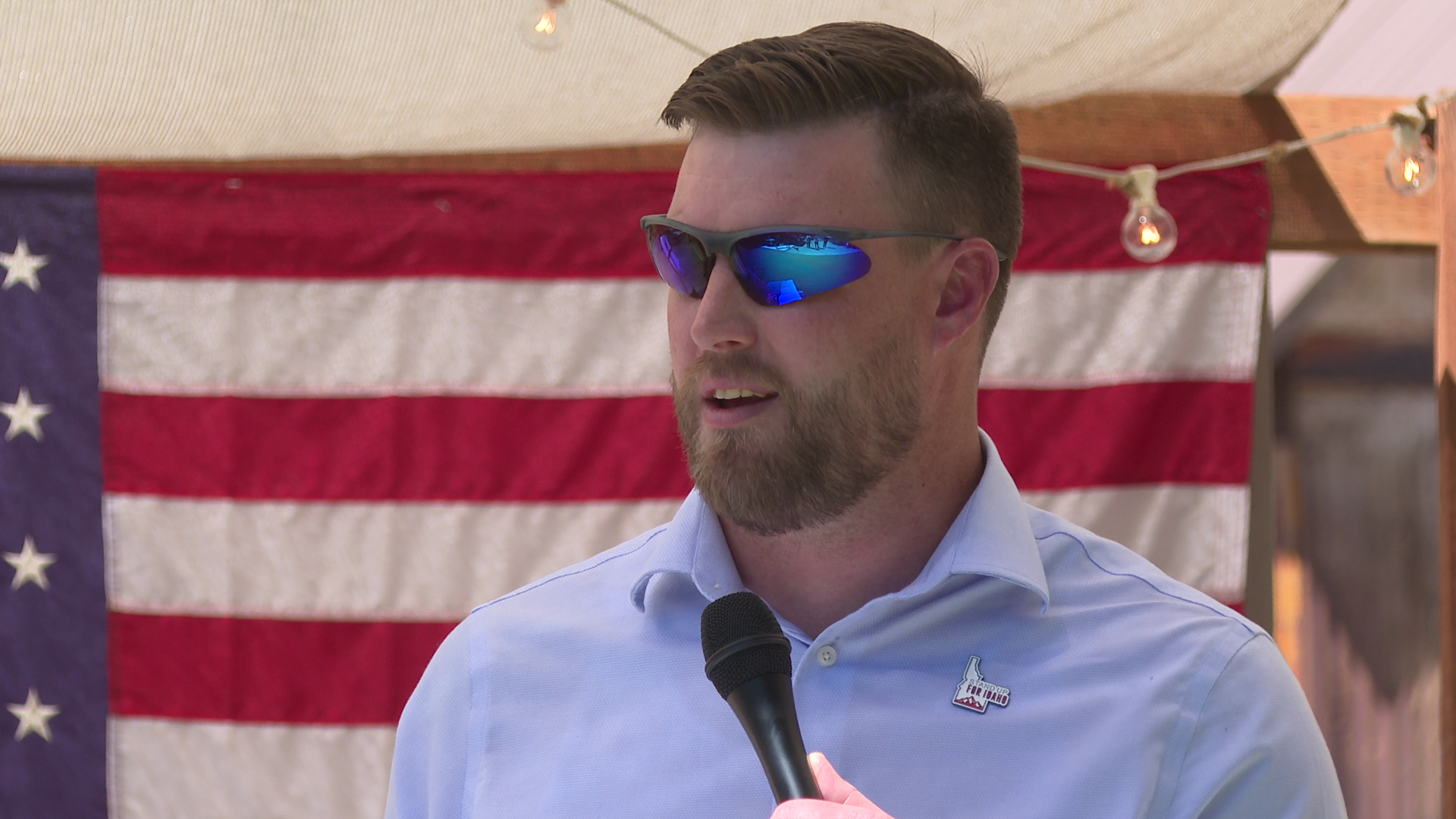
Lawmakers are still trying to get their arms around the One Big Beautiful Bill. But one thing they don’t have to consider, yet, is an oft-proposed transfer of federal lands to state management. Logan Finney is joined this week by state Sen. Ben Adams to talk about a constitutional amendment he’s working on that would govern how Idaho would handle such a federal land transfer.
They also talk about the difficult work of managing budget presentations – and perceptions – on the chamber floors, as well as how recent military action in Venezuela has revitalized Adams’s advocacy for the states reclaiming their constitutional authority over the National Guard.
Transcript: Sen. Ben Adams Has an Idea to Help Keep Public Lands
Logan Finney, Idaho Reports: Senator Ben Adams, thanks for joining us.
Sen. Ben Adams, R-Nampa: It’s a pleasure to be here.
Finney: There was a lot in the governor’s State of the State address on Monday, but one of the items that got an applause from the audience was public lands. That’s an issue you’ve been passionate about, and it’s been in the news over the years. Tell me about this constitutional amendment that you’ve been working on.
Adams: Yeah. The constitutional amendment was unveiled back in August, a draft of it. I wanted to get a lot of feedback, and it turns out on an issue like public lands, when you bring something to the public eye five months before session, you hear from everybody. And so I got a ton of great feedback and hope to introduce that this upcoming week.
Finney: So the context of this conversation was the budget discussions that were happening at the federal level in DC with what became the One Big Beautiful Bill.
There was a time in that process where Senator Mike Lee from Utah had proposed a sell-off of some federal lands, including some here in Idaho. What sort of lands in Idaho that folks might be familiar with out there, that they maybe recreate on, would have fallen under this proposal that had you concerned?
Adams: Almost every district in the state would have land that would have been affected by this. 62% of Idaho is federal land, and large swaths of that. So, pretty much everybody in the state can throw a rock and hit something that was on the chopping block.
Finney: That didn’t make it into the final bill, and so a sale of public lands is not pending imminently. But there’s still always these conversations about, especially here in Idaho, should the federal government turn control of those lands over to the state? Keep them public, but put them into state hands rather than federal hands. Is that something that would be handled in the amendment that you’re planning to introduce?
Adams: So to do another endowment or to transfer additional lands to the states, that would take an act of Congress. However, right now, we don’t have any mechanism to receive that that wouldn’t automatically put it on the chopping block, because of the maximum financial return constitutional requirement for endowment lands. Right now, that’s the only bucket and the only mechanism that the state of Idaho has if the federal government was to give us additional lands. So this is essentially the safety net we’re creating. In the event that that does take place, we won’t sell it.
Finney: So not putting any additional lands into that existing category of the endowment lands that help fund schools, and is overseen by the by the Land Board. You’d want to see something separate that was more geared at preservation rather than returns for public schools?
Adams: Yeah. So the constitution of the state requires maximum financial return, which is why the mechanism for sale is an option with the endowment – and we don’t want to sell. And so that makes it really easy to advocate for a new trust that emphasizes utilization of that land, yes, not only for its resources, but for public access and and utilization.
Finney: All right. Well, constitutional amendments have a pretty high bar to make it through the legislature, and then they end up on the ballot. So we’ll keep an eye on this issue as we move forward.
The other big issue obviously coming into session are the budgets and the revenue projections. You spent some time on JFAC in prior terms, you’re also a member of the Senate’s Local Government and Taxation Committee. What are your thoughts on the budget picture as we come into this tight-looking session?
Adams: I think the Finance Committee is going to have some hard decisions to make. I think the Legislature as a whole is going to have some hard decisions to make. Any time you give agencies an increase to their budget, it is because they believe it is a need and the legislature agrees. In budget years like this, hard decisions have to be made, and that’s really why we’re here.
I think we should focus on the last five years. We’ve increased from roughly almost $9 billion as the state budget to $14 billion, so $5 billion over five years. I know our state has grown. I know we’ve seen a lot of inflation. And there are factors like increased salaries, and all these different things that have played in. And those should be recognized, that some growth may be necessary, but that’s where I would look because that’s a lot of increase in spending in a very short amount of time.
Finney: Are there any particular programs in there that stand out to you as having an outsized role in that increase, or somewhere that JFAC should pay a little extra attention?
Adams: No one’s going to like to hear this. The two largest increases for all state budgets have been Medicaid, so Health and Welfare, and education. We’ve increased education by $1 billion in five years. Medicaid is two, almost three times that in the increase. So a lot of this has been eaten up by those two agencies, and so that’s somewhere that we’ll have to look.
Finney: The composition of the committee has also changed. The ideology, let’s say, of the people on it, as well as the procedures that they use. From your perspective today, as a member on the floor voting on these budgets once they’ve come out and been worked on – Has that process affected how the budgets are perceived on the floor and how the voting there works? Or has all that really just stayed up upstairs in JFAC?
Adams: I think it’s natural for it to spill over a little bit to the floor. Having served on JFAC myself, I already had my opinions and perspectives on budgets. Over the last several years that I haven’t been on JFAC, observing how they’ve changed and how the presentation of those budgets have have changed, has probably played an impact. But I do think there’s still some reverence given to that committee, especially by those who have been on the committee before, understanding how difficult that job is and all the work that has to go into that, just to get a budget out of that committee alone.
Finney: The final topic that I want to talk to you about is an issue that you’ve been a bit of a leader on. It’s Defend the Guard. For folks who aren’t familiar with this topic, can you give us an elevator pitch of this proposal?
Adams: Article I, Section Eight of the Constitution says that Congress can call up the militia.
Finney: The National Guard?
Adams: Which is the National Guard, for specific reasons: to suppress insurrection, repel the invasion, and enforce the laws of the Union. Over the last 20 years, well, I guess it’s 2026 now, so it’s not quite that. But since 2001 especially, the Authorization for Use of Military Force both in 2001 and 2003 have been considered enforcing the laws of the Union as justification to utilize the National Guard in overseas wars. This has been 50%, roughly, of the combat deployments that have been handled by U.S. National Guard units. This would say that Congress needs to reclaim their authority over the guard if they’re going to call them up into active service. Because all of the 2001 objectives, to kill Osama Bin Laden and anyone who had anything to do 9/11, was resolved many years ago. And yet that is still the justification to have National Guard units in Syria and all throughout the world. And so, what this would do is it would require Congress to declare war before sending the Idaho National Guard into a combat zone.
Finney: So it wouldn’t preclude troops from being sent at all. It would just require Congress to in, in your words, reclaim its authority from the president.
Adams: Absolutely, yeah. And given the global events that are going on right now, it’s become quite – there has been some cohesion around the idea that the states’ authority over their own militia needs to be reclaimed.
Finney: Sure. I’m curious about that, because you personally have a military background. You’re also from a family that traveled around a lot doing missionary work. So you’ve seen a lot of the world, and you run in the circles of military veterans and people who are really passionate about this. Have you seen a shift in public perception with how world events have changed over the last year or two?
Adams: They’re changing so fast. The opinions change fast.
Finney: I’m hesitant to name any specifics because you never know what will have changed by the time this airs, you know?
Adams: Yeah, that’s a good point. Now, something that maybe is a point of interest recently, is obviously the operations that have gone on in Venezuela. The President and the Secretary of State cited Article II, the War Powers Authority, for the president being able to use that, which I would argue is the law of the land, and he is able to do that. And I think that’s the general consensus. The concern would be if they were utilizing National Guard troops to enact that, because Article II says that the president is the commander in chief of the army and the navy and the militia, comma, when called into actual service.
Finney: So, when Congress under Article I has actually said we’re engaged with a foreign enemy.
Adams: Correct.
Finney: This is a bill that you got through the Senate, but not the House last session, is that correct?
Adams: Correct. It passed the Senate with a veto-proof majority and unfortunately, it did not survive the committee over in the House. I anticipate us hearing it again this year, and we haven’t quite worked out all the details on where it’s going to start and where it’s going to go. But the renewed interest in the issue, not just for legislators but the public at large, recognizing that Article I and Article II and all of these ideas of our Constitution, our system of government and how it’s supposed to work, it only works if people actually step up and say you have to follow it. And that is somewhere where the Idaho Legislature and state legislatures around the country have this authority.
Finney: The Constitution is not just an idea. It’s a bunch of specific language.
Adams: Yeah. Yes it is.
Finney: Sen. Ben Adams from Nampa, thanks for joining us.
Adams: Thank you.
We’ll have more discussion about public lands on this week’s episode of Idaho Reports with new Assistant Majority Leader Doug Pickett, R-Oakley, and Minority Caucus Chair Monica Church, D-Boise.