
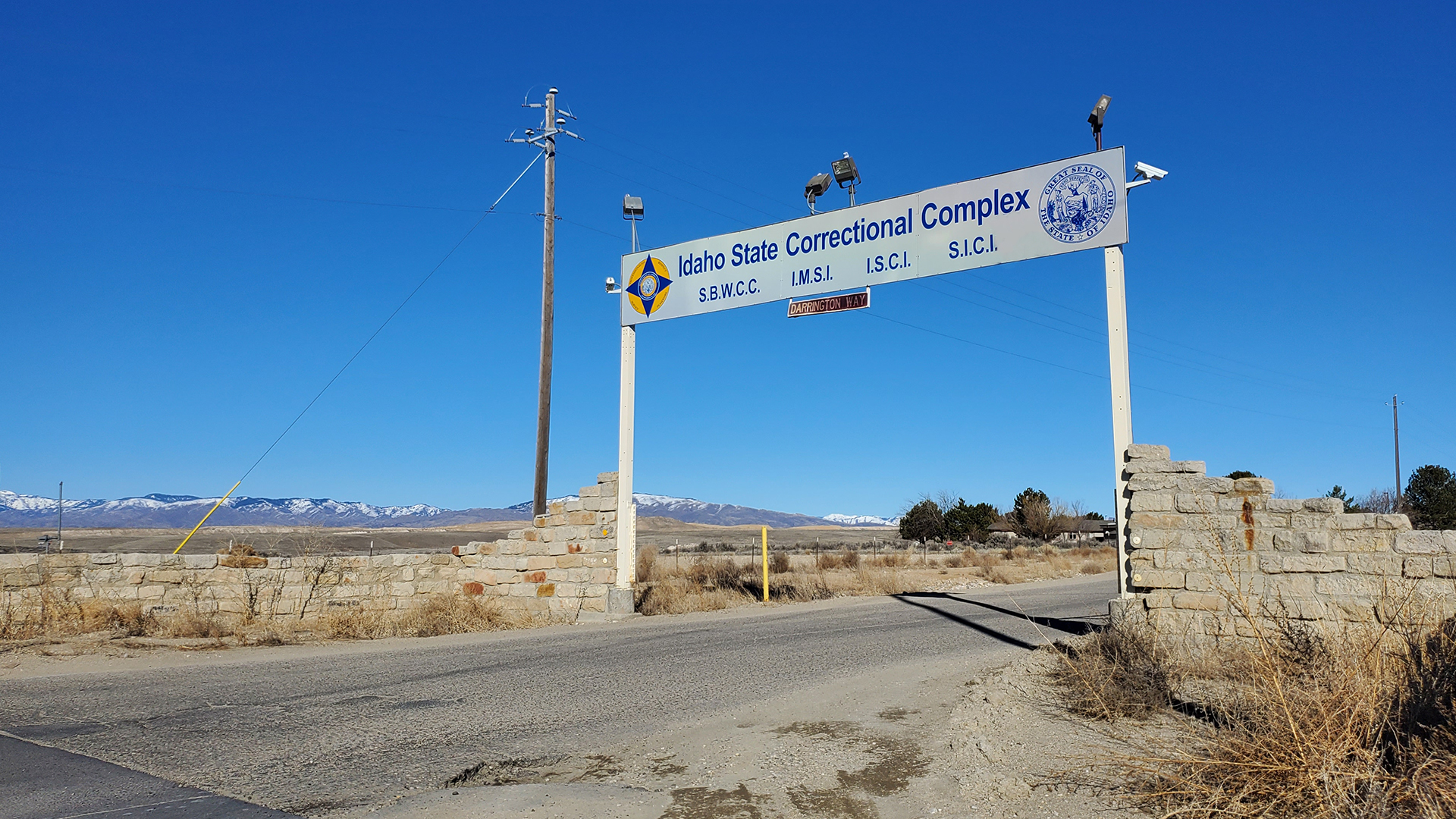

By Ruth Brown, Idaho Reports
The Idaho Department of Correction announced Tuesday that future executions by lethal injection may now use a central vein, if needed, rather than just the peripheral veins of a condemned person.
Designated execution witnesses will see a live audio and video feed of the execution preparation room where IVs are inserted, rather than witnessing it through glass as prior executions allowed. The condemned would later be moved into the execution chamber, which designated witnesses can see through glass.
A central vein is a major vein in the body, usually in the chest, neck or groin. Access to a central vein requires the insertion of a catheter. A peripheral vein is closer to the skin’s surface, such as in the arm or hand, commonly used in things like a blood draw or establishing an IV line on a patient.
IDOC’s new standard operating procedure outlines the same four potential chemical combinations that could be used in a lethal injection method.
The change comes after the failed execution attempt of 74-year-old Thomas Creech on Feb. 28, in which the medical team could not establish an IV line to carry out his execution by lethal injection. The department called off his execution.
IDOC’s news release stated the policy at the time of Creech’s execution attempt allowed for establishing a central line — an alternative method of establishing IV access when peripheral access can’t be established — but IDOC lacked the appropriate environment to conduct the procedure. Over the summer, IDOC renovated F-block, where executions are done, to create an execution preparation room for that purpose.
IDOC policy does not require the department to host public meetings regarding a change in procedure. Instead, the decision is left solely to IDOC’s director.
“If the medical team leader determines peripheral IV access is not attainable, a qualified physician will establish a central line,” according to IDOC’s news release. The news release does not expand on who the physician would be, and the medical team’s identities would remain anonymous.
The new policy states “Prior to leaving the Execution Preparation Room, the assigned Medical Team Members must ensure the catheter is properly secured with the use of tape or adhesive material and/or sutures (if necessary) out of reach of the condemned person’s hands.”
The new policy also outlines a timeline for when the condemned person may request a spiritual advisor during their execution, if they choose. Under the policy, the person may submit a concern form to the Idaho Maximum Security Institution warden requesting the presence of a spiritual advisor in the execution chamber no later than 14 days prior to the scheduled execution.
“Our previous protocols proved effective at protecting the integrity of the process and ensuring adherence with 8th amendment protections against cruel and unusual punishment,” said IDOC Director Josh Tewalt through a news release. “These changes enhance the State’s ability to carry out an execution by lethal injection by ensuring we have the infrastructure in place to establish IV access.”
“Execution by lethal injection remains the primary means of capital punishment in the State of Idaho. Governor Little has made clear his support of capital punishment,” said Joan Varsek, spokesperson for the Governor’s Office. “As the chief executive of state government, Governor Little’s job is to follow the law and ensure lawful criminal sentences are carried out. The improvements to the execution procedures help ensure the State of Idaho can carry out just sentences as ordered by the court.”
CONSTRUCTION
Through a public record request filed by Idaho Reports, some insight into changes at Idaho’s death chamber is now available.
IDOC made some of the requests available to Idaho Reports but denied other requests for information about construction and renovations. It’s clear IDOC is building a new “medical exam room” with new lighting, a new or additional sink and water heater, and new flooring, according to copies of emails exchanged between Okland Construction employees and IDOC’s Facility Service Unit Manager Justin Freeman and other IDOC employees.
The building permits are regarding construction improvements in F-block at IMSI, where executions take place.
Record requests confirm the department is renovating F-Block in two phases, with the second phase being the creation of a room for IDOC to carry out an execution by firing squad. That renovation is not yet complete.

Ruth Brown | Producer
Ruth Brown grew up in South Dakota and her first job out of college was covering the South Dakota Legislature. She’s since moved on to Idaho lawmakers. Brown spent 10 years working in print journalism, including newspapers such as the Idaho Statesman and Idaho Press, where she’s covered everything from the correctional system to health care issues. She joined Idaho Reports in 2021 and looks forward to telling stories about how state policy can impact the lives of regular Idahoans.