

by Logan Finney, Idaho Reports
The State of Idaho has responded to a lawsuit from a trio of developers who sought to buy a piece of surplus land – but different parts of the state government are responding in very different ways.
Gov. Brad Little has replaced Attorney General Raúl Labrador by appointing a private attorney to represent the Department of Administration and the Idaho Transportation Department in the suit.
Labrador remains on the case representing the State of Idaho and the Board of Examiners, a board made up of Idaho’s constitutional officers that typically handles financial administrative matters.
Separately, the Idaho Legislature is also preparing to defend the constitutionality of its move to block the sale.
So how did we get here, and why does it matter? Here’s a breakdown.
What started the lawsuit?
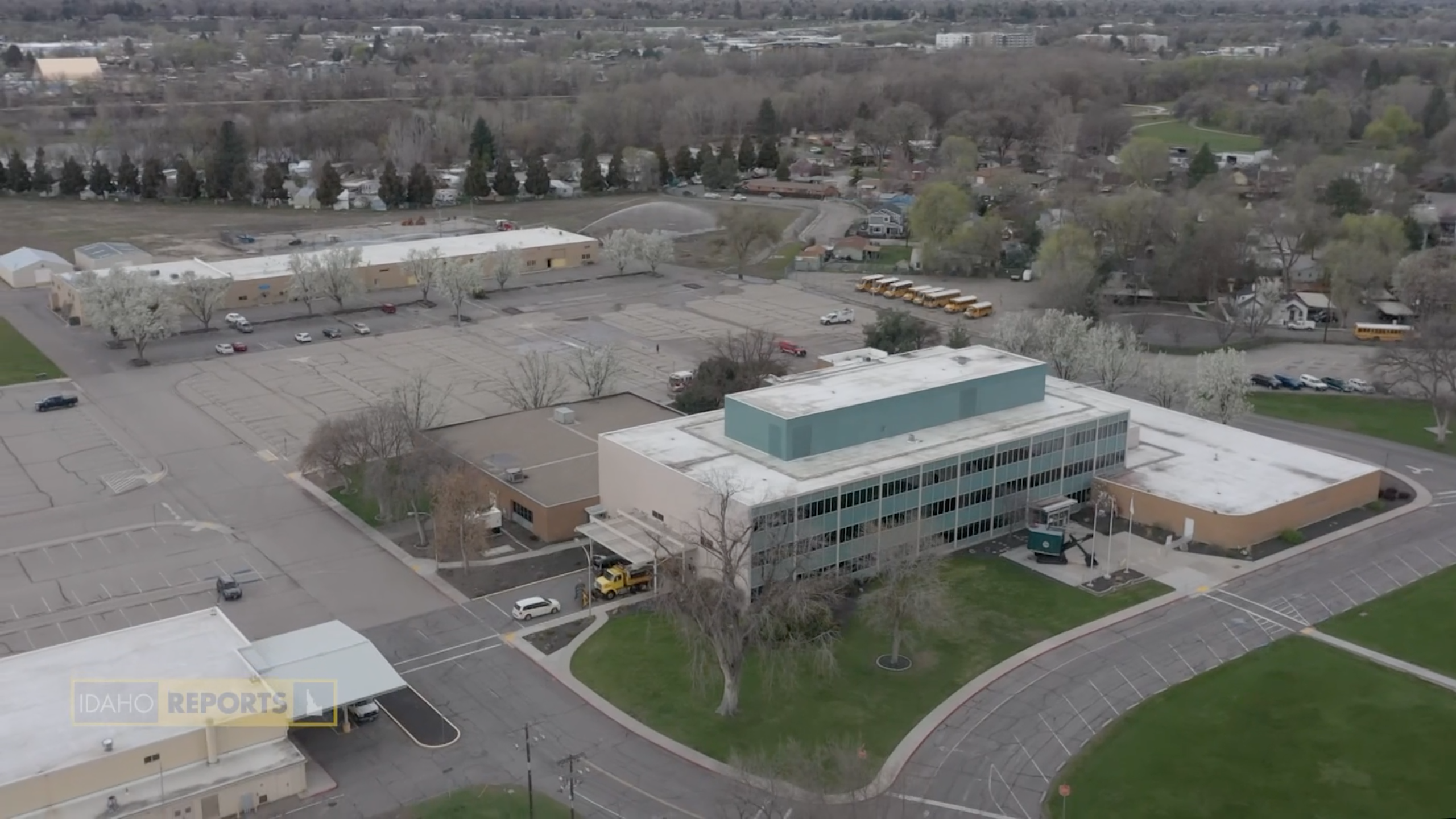
The Idaho Transportation Department moved out of its historic Boise headquarters in 2022, which was accelerated after a flood damaged all three floors of the main building. The state later put the 44-acre site up for sale, but lawmakers blocked the purchase at the end of the 2024 session. Some legislators expressed concern that the sale did not bring in enough money to justify relocating ITD.
Three companies jointly submitted the winning bid for the property: Hawkins Companies, Pacific West Communities, and FJ Management. The developers’ lawsuit argues that the Legislature violated the single-subject rule in the Idaho Constitution by adding language that blocks the sale into the agencies’ budgets for the upcoming year. The filings assert it is unconstitutional under existing legal precedent for the Idaho Legislature to use appropriations bills to change general law.
The Idaho House of Representatives passed a bill to alter how the state sells its surplus property, which did not advance in the Senate. The joint budgeting committee then inserted language into a pair of budget bills that revoked the Department of Administration’s authority to dispose of the land and returned ownership of it from the Board of Examiners back to the Idaho Transportation Board.
Under the existing surplus property statute, the Board of Examiners automatically took possession of the site upon its designation as surplus property. The Hawkins lawsuit argues that any language attached to agency budget bills cannot alter existing general laws, such as the surplus statute.
“There are no off-ramps,” the developers say, and the state should be compelled to finish the sale.
The State of Idaho generally asserts in its responses that it has discretion in whether to complete the sale. But which branch has the power to make that decision: the executive or the legislative?
How did the Board of Examiners respond?
Attorney General Labrador filed his response with the court on May 15 on behalf of the State of Idaho and the Board of Examiners, the two parties specifically named in the lawsuit.
The Board of Examiners – made up of the Governor, Secretary of State, and Attorney General, with the State Controller acting as a non-voting board secretary – discussed the Hawkins lawsuit on both Tuesday and Friday, behind closed doors in executive session, several days after Labrador had already filed his legal response on their behalf. They haven’t yet taken a public vote or announced any decisions concerning the lawsuit.
But on Wednesday, Little appointed a private attorney to represent the two administrative agencies, Joan Callahan of the Boise firm Naylor & Hales, under a section of state law that gives him the power to do so if “the governor determines… that counsel assigned to represent or give legal advice [by the Attorney General]… cannot effectively advocate or pursue the policies of the governor.”
What does Labrador argue?
Labrador argues in response to the lawsuit that the State of Idaho has discretion over whether it will sell the land, and that the passage of the two budget bills has rendered the property no longer surplus.
“Statute does not require the State to sell. It directed the Department of Administration to ‘commence’ sale procedures, and the Department complied, but nothing in the text requires the Department to complete a sale it does not want to complete,” the Attorney General argued in the May 15 filing. “If the Department decides to hold out for a better price, to break off negotiations with a particular buyer, or to withdraw a property from the market because of changed circumstances, it can do so without violating a single word of the statutory text.”
Labrador’s filings argue the underlying constitutional questions about the single-subject rule are a moot point because there is no executed sale contract which the court could order the state to carry out, nor is the state taking any affirmative actions which the court could order it to stop.
What about the governor?
The attorney now representing the Department of Administration and ITD argues that the surplus statute was deliberately designed to neatly parse out the proper authorities and responsibilities involved when the state engages in a complex real estate transaction.
No parties dispute the timeline in which ITD declared the land as surplus and the Department of Administration solicited bids from other state agencies then put the property up for public sale.
“However, before the sale could be signed and completed, the Idaho Legislature, in both of Respondents’ appropriation bills, inserted provisions of general law attempting to ‘revoke’ or create an exception to the authority granted” to the agencies by the statute, Callahan writes.
The filings say the Department of Administration needs clarity on whether all surplus property sales are subject to review through the Legislature’s appropriation process, while ITD needs to know whether it actually has the authority to move forward with lawmakers’ desire to rehabilitate the flooded building.
She also argues the case does in fact present a constitutional question for the court to address.
The governor and agencies argue that general laws apply continuously, whereas budgets only apply to an individual fiscal year – possibly triggering another attempt to sell the property if the next year’s agency budgets don’t also revoke the authority to sell the land as triggered by the surplus statute.
Little allowed these budget bills to take effect without his signature in May due to concerns that vetoing the legislation could have jeopardized vital infrastructure funding for roads and bridges.
“In the 1978 case Cenarrusa v. Andrus, the Idaho Supreme Court determined that the Governor’s line-item veto authority may only be used to strike actual monetary appropriations,” his press secretary Madison Hardy said in a Friday statement to Idaho Reports. “However, the language in the appropriation bills being challenged by Hawkins in court did not contain any monetary appropriations. Accordingly, existing Idaho case law did not allow the Governor to line item veto the challenged language.”
The arguments from the executive branch agencies split the difference between Labrador’s argument – that passage of the budgets put the entire issue to rest – and the developers’ argument, that the state must finish the sale. They do acknowledge that the budgets contain “hallmarks of an appropriation act that is in violation of the single-subject requirement.”
Callahan stressed the need for clarity on the constitutional questions in the lawsuit, how they impact the statute on surplus property disposal, and exactly which state entities are responsible for the “various interests that comprise the bundle of sticks of the ITD Campus property rights.”
If the Idaho Supreme Court does rule the intent language within the budgets is unconstitutional, the agencies argue the court should stop short of forcing completion of the sale as requested by Hawkins.
What about the Legislature?

House Speaker Mike Moyle, R-Star, is listed in the court filings as an intervenor in the case on behalf of the House of Representatives.
Moyle told Idaho Reports by phone on Friday that he does plan to participate in the case through additional counsel, separate from both the Governor and the Attorney General. He has retained attorneys Mark Hilty and Daniel Bower of the Nampa-based firm Hilty, Bower, Haws & Seable.
Senate President Pro Tempore Chuck Winder, R-Boise, was vocally opposed to lawmakers blocking the sale, which was the final issue they addressed before adjourning the session.
“I talked to Winder, and he doesn’t want to touch it,” Moyle said.
State law gives both the House Speaker and the Senate Pro Tem individual authority to intervene on behalf of the entire Idaho Legislature when a case involves the constitutionality of a statute.
So what happens next?
The language in the ITD budget transferring “custody and control” of the site back to the Idaho Transportation Board took effect on May 10 upon its passage without Little’s signature. Similar language in the Administration budget takes effect at the start of the fiscal year on July 1, 2024.
The Idaho Supreme Court intends to set oral arguments for late August, during its regular fall term.
As we’ve discussed on the show, the case has huge implications for just how prescriptive the Joint Finance-Appropriation Committee can get with the “intent language” it puts in state budgets. It could also affect how closely the Legislature oversees future decisions made by executive agencies.

Logan Finney | Producer
Logan Finney is a North Idaho native with a passion for media production and boring government meetings. He grew up skiing, hunting and hiking in the mountains of Bonner County and has maintained a lifelong interest in the state’s geography, history and politics. Logan joined the Idaho Reports team in 2020 as a legislative session intern and stayed to cover the COVID-19 pandemic. He was hired as an associate producer in 2021 and they haven’t been able to get rid of him since.