
Lawmakers have debated for several years over adjustments to how the state should fill judicial vacancies when judges retire. A bill introduced in the House this week on judicial retirements is also tied to pay raises for judges.
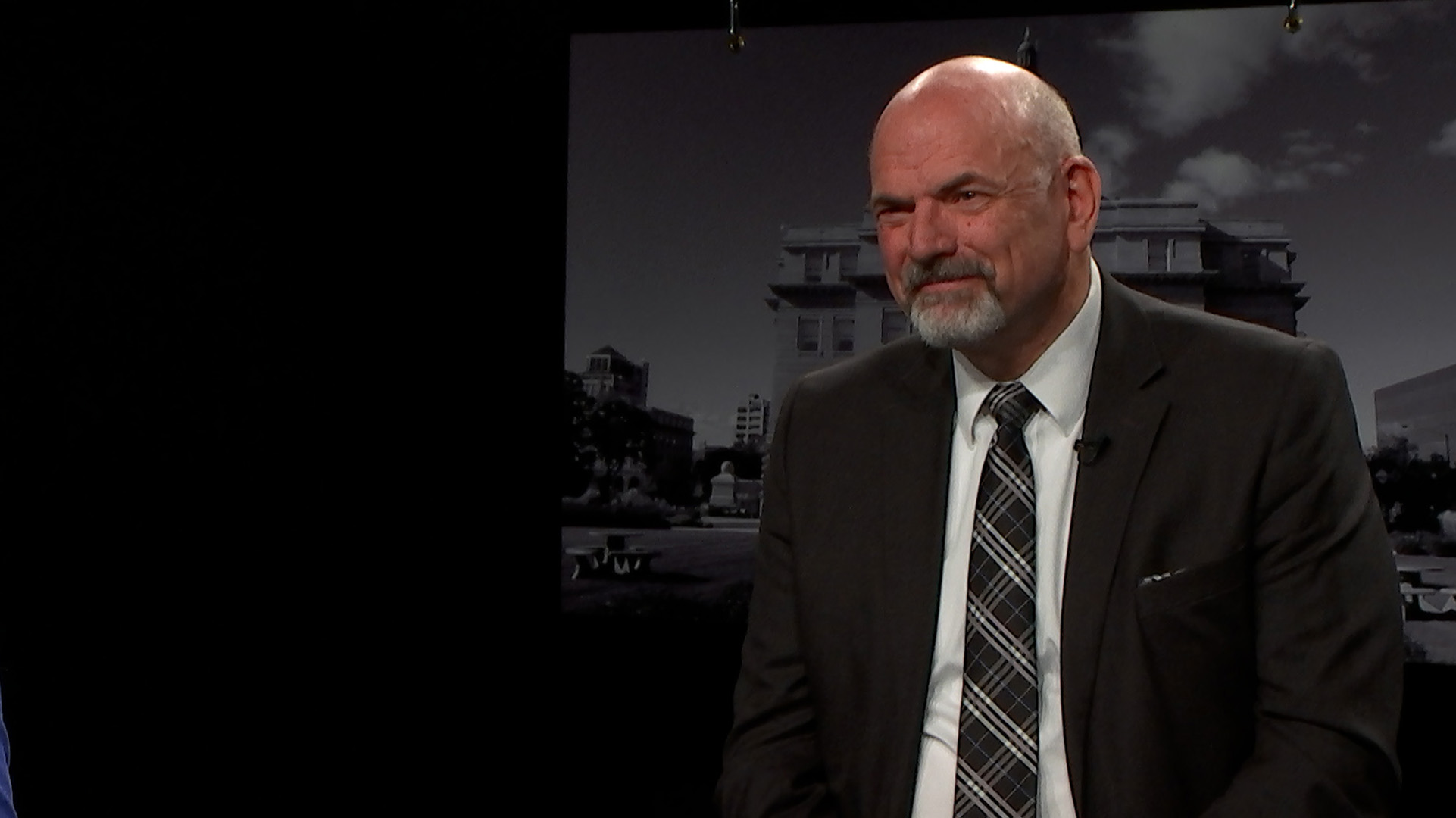
Producer Ruth Brown spoke with Idaho Supreme Court Chief Justice G. Richard Bevan on Thursday about his concerns with the bill and its potential impact on the court system. Here’s the transcript of that conversation.
Ruth Brown, Idaho Reports
“Justice Bevan, the Senate Judiciary and Rules Committee, held a bill last Friday that would have impacted how we replace some judges who retire before their term is over. And then promptly on Tuesday, we saw a new bill come through that would have addressed judges who leave before their term is over. But that is tied to judicial raises. What are some of your concerns around this?”
Chief Justice Richard Bevan, Idaho Supreme Court
“Our main concern is the way that this bill has been structured with judicial compensation and combined with policy matters affecting judicial retirement and elections. The bill, as you said, was held in the Senate Judiciary Committee last week. An administrative judge spoke to it. Others came forward and talked about concerns about the bill and how it would be managed, how we would run the courts if the bill passed and the bill did not pass out of the Senate committee.
“But as you say, it was it was resurrected, if you will, Tuesday and now contains an additional clause tying the passage of this bill to judicial compensation. Our concern is when these things happen to the judiciary and to our branch of government, they don’t happen to anybody else in state government. It’s not as though another agency, another branch, is having their potential compensation increase tied to a policy bill.
“Let’s say, for example, all state employees in the telework bill requiring them to come back to the office and work, have that bill tied to their ability to obtain CEC or change in compensation this year, and that it would only pass if they’re in the same bill. That’s a hot button policy issue of its own accord, but it’s not tied to compensation for others. For whatever reason this is now the second time this has happened in the judiciary, and we felt it important to let the public know. Let the people of Idaho know that Idaho judges aren’t for sale, that that’s the way we see it. By putting our compensation in with a policy bill where we either agree to the policy, which we’ve already spoken against in the Senate and then agree to it, or we don’t get a raise, that it’s almost like a quid pro quo for judges.
“And I want the public to know that Idaho’s judges are fiercely independent. Fiercely righteous. And I don’t say that in a in an overwhelming way about how they conduct themselves. But they do things right, and they do it based on the law and not on their own personal whim or how they expect to be treated by a legislature if they do it one way or the other.
“They rule on the rule of law. Our judges work extremely hard. They do an extremely difficult job day in and day out. And so now to say, well, ‘you get a compensation increase like every other state employee, but only if you agree to this bill,’ that significantly hamstrings the ability to administer the courts. And so that’s why we want Idaho citizens to know that we have to stand up and say ‘no’ if it means we don’t get a raise this year for the second time in three years, that’s what it means.
“And we’re prepared to deal with those consequences.”
Ruth Brown
“The legislation would mean that if a judge leaves prior to his or her term, the seat would be filled by a senior judge. Can you walk me through what the what that means for the courts and what kind of a burden that would be to the courts?”
Chief Justice Bevan
“Well, first of all, senior judges are judges who are retired. They’ve left the bench because they don’t want to be working full time. We don’t have a huge cadre of senior judges throughout the state. Where I came from in the Fifth District, Twin Falls, South central Idaho, there are very few senior judges down there to do this work.
“When I came to the Supreme Court in 2017, my good friend and colleague Randy Stoker, passed away and his his seat had to go to election because of the way his death happened. And so the seat was vacant for almost a year. And judges were coming from Treasure Valley to handle cases day by day, week by week. Senior judges.
“And so it’s difficult, number one, to get judges who have the capacity and time to do that. And number two, we just don’t have the budget or the wherewithal to pull judges in. So then it becomes a question of, well, are we going to then circle the wagons and have all the judges who are already having a full caseload handle the vacancy and the absence in this in this period of time, which could be up to multiple years in the case of a Supreme Court justice.

Ruth Brown
“Are there legal concerns around the delays in cases? How that will affect an Idahoan?”
Chief Justice Bevan
“Well, certainly Idaho’s constitution guarantees a right to a speedy trial for criminal defendants and frankly, to all litigants who come to the court seeking a speedy and prompt resolution of their dispute. The likely resolution is that criminal cases take precedence due to the constitutional requirement of speedy trials, and civil cases will likely be pushed to the side and be handled as they can, but certainly not in a priority fashion and not in the way that if a judge were there handling these cases week after week, they might be handled.”
Ruth Brown
“There are some legislators who would argue that judges should always be elected rather than appointed. You’re on the ballot this year. You don’t have a challenger yet. But can you walk me through what are some of the ethical differences that judges face when running for election versus a councilman or a legislator?”
Chief Justice Bevan
“Well, first, let me say we don’t shy away from being elected. I’ve been elected four times in my career so far. And we understand the Constitution mandates judges are elected when when it comes time to be on the ballot, like I am this year. So so I say that. But against the environment of 1890, when our Constitution passed that requirement versus today, the judges ethically are not allowed to go out and fundraise themselves.
“You have to have an independent board or committee to do that for you. I can’t even know if someone donates to my campaign who they who they are. I simply see that some money went into the campaign account and I’m able to continue to try. I mean, that’s a huge challenge for a sitting judge. We also aren’t allowed to go out and meet with the public and make promises like a typical politician might about how they stand on issues where they will vote.
“We have to take cases as they come and we can’t tell the folks, ‘well, I lean this way. So when this case comes up, this is how I’ll handle it.’ That’s simply not the way we we do business. And that limits us in the capacity and ability to go out and really let people know who we are. So much of the public just knows the judiciary does their job and we we get through our job.
“And so many don’t even know who we are, who we are on the ballot. And so it’s a big challenge to help people understand this is what we do. This is why we do it. But it’s a much different environment than your typical campaign.
Ruth Brown
“When it comes to working with the legislature, do you see it as your role as educational?”
Chief Justice Bevan
“Absolutely. And in the right ways mean we understand the separation of powers.”
Ruth Brown
“There’s always a push and pull.”
Chief Justice Bevan
“Right. In the legislature, certainly the branch of government, to set policy that impacts the state citizens and the people in Idaho. But we, by constitution, are tasked to administer and supervise the judicial branch of government. And so when policy things like tying our pay to a policy outcome affects how we administer and how retirement choices that might leave us with no judge for three years, we step in and try to be heard in that regard.
“We also are welcome or welcome questions from our legislators about potential legislation. ‘How do you feel about the way this is worded? Can the courts make this work?’ For example, the Clean Slate bill that passed last year, we were we were involved in that process. And when I say ‘we’ we have a team of legislative experts, not justices, who engage in that type of education, as you asked the question.
“And so, yes, we’re anxious to engage. We try to help each other out, as it were, in terms of what we see. But’ in that same breath, we can’t express an opinion about, ‘well, this is clearly an unconstitutional provision’ or ‘this is how this will come out if it comes before the court.’ That’s a question we have to decide later.
“But we can certainly express concerns about administration and how it affects the Judiciary and the people’s right to have their cases heard as a whole.”
Ruth Brown
“You mentioned have a having a seat vacant for three years. Can you think of any cases, or excuse me, judges that come to mind? You mentioned one earlier.”
Chief Justice Bevan
“Right. We had the judge who passed away. It ended up being a one-year absence. We’ve had a judge who just tendered in the last week or ten days a letter of intent to retire midyear, this year, under Plan B, which is the direct focus of this bill. If he retires, he’s from the first district of north Idaho in the Panhandle.
If he retires, his seat will be vacant nearly three years and four senior judges who are serving up there. We don’t have a bundle of them and we don’t have the budget to pay them if we did have them. And secondarily, the judges who are already serving there come from Wallace, come from Sandpoint, come from the judge who is already in Couer d’Alene.
It would just be near unto impossible to try and manage the judge’s caseload when he retires.”
Ruth Brown
“Chief Justice Bevan, I appreciate your time.”
Chief Justice Bevan
“Thank you very much for having me.”

Ruth Brown | Producer
Ruth Brown grew up in South Dakota and her first job out of college was covering the South Dakota Legislature. She’s since moved on to Idaho lawmakers. Brown spent 10 years working in print journalism, including newspapers such as the Idaho Statesman and Idaho Press, where she’s covered everything from the correctional system to health care issues. She joined Idaho Reports in 2021 and looks forward to telling stories about how state policy can impact the lives of regular Idahoans.