

by Logan Finney, Idaho Reports
The Joint Finance-Appropriations Committee advanced just over $12 billion in spending early this week, despite protests from Democrats. It’s the latest in a series of objections over the new budgeting process, though Republicans say the concerns are unfounded.
“This was a procedural protest. We’re not against budgets for state agencies by any means. But we are concerned about the procedure, partly because it was very rushed,” Sen. Rick Just, D-Boise, told Idaho Reports on Tuesday. “I think there’s a pretty good chance there are some things in there that they’ve missed at this point too.”
The ten “maintenance budget” bills the committee approved on party lines are part of a revamped budgeting process for 2024, which also includes an abbreviated hearing schedule.
Previously, for the first several weeks of session, JFAC would hear presentations on agency budget requests and needs. Members would then set all individual budgets in succession several weeks into the session. This year, the co-chairs intend to introduce agency-specific budget bills that address needs beyond the maintenance budget on a rolling basis about two weeks after each presentation, the first of which will start on Wednesday.
The ten maintenance budget bills passed out of committee on Tuesday cover several agencies or departments, some of which with billions in taxpayer dollars. The committee will begin hearings on budget specifics for individual agencies starting on Wednesday.
Democrats on the budget committee took issue with the base amounts assigned to the individual agencies.
“We got these budgets – there’s 100 of them almost, 96 budgets – on Friday, and voted on all of them on Tuesday morning. And we were still getting corrections as of last night,” Senate Minority Caucus Chair Janie Ward-Engelking, D-Boise, told Idaho Reports.
Ward-Engelking also expressed concern over what counted as a “maintenance budget.”
“I don’t believe they’re maintenance budgets. There are things taken out from last year that will have to be added back in. So, what they are is bare bones cuts – over $165 million in cuts,” Ward-Engelking said. “Did we just tell the public in some crazy way that we have all this extra money at the end of the page? Which we don’t, if we go back and fix these budgets like we need to – but it looks like we’ve got a couple hundred million dollars that we saved.”
Democrats also worry passing these basic budget bills early in the session may give the legislature an easy out to claim they have funded state government and head home sooner to campaign for the year.
“They say we’ll come back and fix them. But what if we can’t open the budget? What if we can’t get it open? What if four people on one side or the other say, ‘No, I like it just the way it is?’” Ward-Engelking said. “They could just stay bare bones, and there’s nothing in these budgets that equates to ‘Everything is going to be like it was last year.’ No, some of them are actual cuts.”
Democrats are also concerned about a JFAC rule that requires a two-thirds committee vote to reopen a budget once its legislation has passed, saying the rule will cause procedural hurdles for incorporating agency-specific line items and Friday’s change in employee compensation report into the budget.
“You look at it, the maintenance budgets have made it to the floor. They’re going to be voted on, and now we’re going to go back to look at the rest of them. Nothing says we have to, right?” Rep. Brooke Green, D- Boise, said to Idaho Reports. “As our caucus, trying to ensure that we will be revisiting budgets, that we will be that we will be revisiting these line items, and that we’re going to be able to get passage of some of these incredibly important agency budgets out to the floor” will be a top priority.
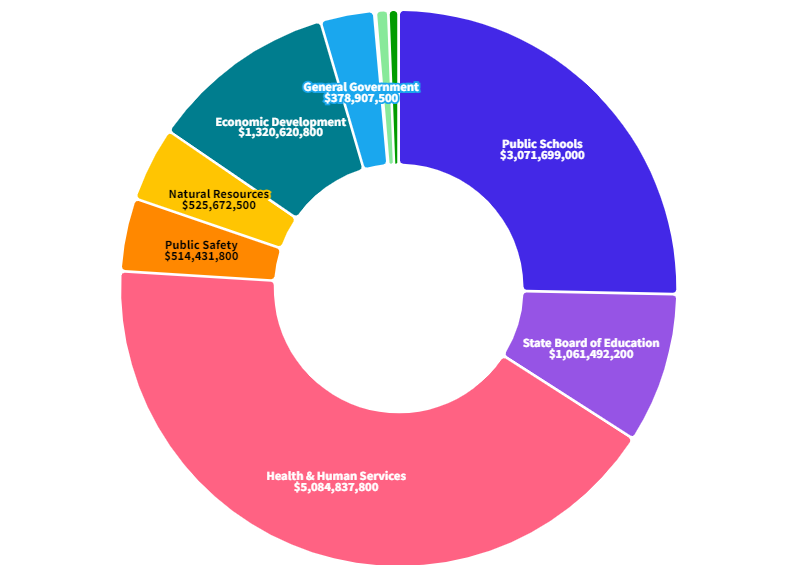
| FY 2025 Maintenance Budget Setting | $12,138,268,400 |
| Public Schools | $3,071,699,000 |
| Office of the State Board of Education | $1,061,492,200 |
| Health & Human Services | $5,084,837,800 |
| Public Safety | $514,431,800 |
| Natural Resources | $525,672,500 |
| Economic Development | $1,320,620,800 |
| General Government | $378,907,500 |
| Legislative Branch | $11,566,500 |
| Judicial Branch | $88,474,300 |
| Constitutional Officers | $72,055,000 |
JFAC co-chair Rep. Wendy Horman, R-Idaho Falls, readily dismissed the Democrats’ concerns about the two-thirds rule.
“They’re wrong,” Horman told Idaho Reports on Tuesday.
JFAC’s rules as listed on the legislature’s website do specify a two-thirds roll call vote of the quorum present is necessary to reopen budgets, request supplemental appropriations, or suspend the rules.
However, Horman explained, the committee’s rules only apply during the interim after negotiations last session over how the powerful joint committee functions. No other legislative committee functions under its own special rules during the regular session, Horman said.
“This paranoia that we’re not going to take up the remaining requests and recommendations, not sure where that’s coming from. Our schedule’s public,” Horman said. “I’m not sure where that fear is coming from. It’s on the schedule. We’re going to hold those hearings.”
Even if JFAC did have to meet a two-thirds vote to add onto what is included in the maintenance base budgets, Sen. Kevin Cook told Idaho Reports he does not expect the committee to run into that issue.
“It’s going to make us as legislators maybe more willing to negotiate, to talk through things and not just count on votes,” the Idaho Falls Republican said. “You can’t go home unless you have a balanced budget. We’ve done the maintenance, the base budgets, and so we’ve done that. We still have to go through the line items and the governor’s things and at least acknowledge that we’ve looked at it.”
Those motions are typically made by unanimous consent of the committee anyway, Horman pointed out.
“If someone objects, we’ll run a motion and take a vote. And those who don’t want to reopen the budget – which I don’t assume will be the Democrats – my sense is that the committee wants to work jointly, which is the whole point of a joint committee, and be cooperative about that,” Horman said. “Our sense right now is that the committee will continue to work cooperatively, as it has in the past, and we’ll take up all the requests as we get to those hearings.”
JFAC co-chair Sen. C. Scott Grow, R-Eagle, told committee members on Tuesday morning that enough members have expressed to him a desire to either increase or decrease certain budgets, and he is confident all of them will see changes in the coming weeks.
“We passed all the base budgets which basically says ‘What did we give you last year? Okay, that’s what we gave you last year. We’re gonna give it to you again, nothing different,’” Cook said to Idaho Reports. “So, all that’s done. Now we will start going, ‘Okay, what are the line items? What are the line items that you’re requesting?’ Or, ‘What do I want to pull back or pull away from agency on the budget?’ And so, that’s what we’ll start now.”
JFAC will start hearing individual agency budgets on Wednesday with the State Historical Society, Commission for Libraries, and Office of Drug Policy.
“There’s nothing that says we have to reopen those and make those changes – but I believe it’s to all of our interests. Let’s negotiate,” Cook said.
The novel approach to funding the base budgets of state government has advanced on party lines, but JFAC is made up of only twenty members. It remains to be seen how the rest of their colleagues on the House and Senate floors feel about the process. Democrats worry the base budgets will make it harder for the rest of JFAC’s work to pass on the floor later this session.
“We have to open up the current budget and then we would have to run that bill. And it will be voted up and down. All the leverage we have, like ‘You can’t go home until we get a transportation budget through,’” Ward-Engelking said. “Now, oh, ‘We got a budget through, we can go home.’ We just don’t get all these other things.”
“I’m concerned that we’re moving too fast, but I understand you’ve got a limited amount of time to get this thing done. I don’t want to be here in April. I want to get it done,” Cook said. “It’s something new. I think all of us have a little bit of jitters, are a little nervous about it. But the first day I think was a great success. If it doesn’t work, we’ll change it next year, or change it midstream, but right now, I think it’s working.”

Logan Finney | Producer
Logan Finney is a North Idaho native with a passion for media production and boring government meetings. He grew up skiing, hunting and hiking in the mountains of Bonner County and has maintained a lifelong interest in the state’s geography, history and politics. Logan joined the Idaho Reports team in 2020 as a legislative session intern and stayed to cover the COVID-19 pandemic. He was hired as an associate producer in 2021 and they haven’t been able to get rid of him since.